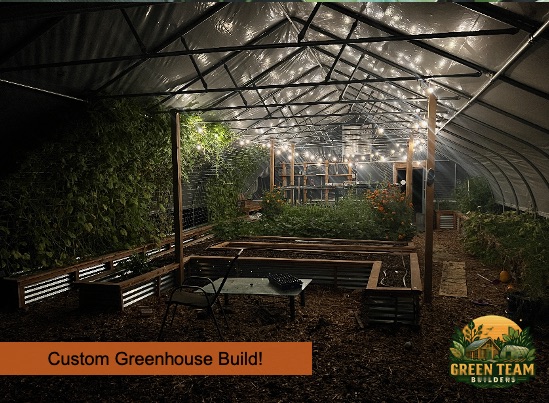
Do you need a permit for a greenhouse or high tunnel in Virginia? It depends on how the structure will be used, where it sits, and what your county requires. A qualifying farm structure is exempt from the Virginia building code, but zoning, land disturbance, and floodplain rules can still apply. Your county is the final word, so check before the kit ships.
That short answer frustrates a lot of growers, and we get it. You have a site picked out, a structure in mind, and a growing season you want to get ahead of. The good news is that the questions your county will ask are predictable. Once you know them, you can walk into the building or planning office prepared, get a clear answer, and keep your project moving.
This guide walks through how Virginia treats farm structures, why a high tunnel and a permanent greenhouse can land in different categories, how your foundation choice fits in, and who to call before anything goes in the ground.
Why permit questions come up before kit delivery
Most permit headaches start the same way: the structure is ordered first and the rules are checked second. By the time the boxes arrive, the grower learns the chosen spot is too close to a property line, sits in a floodplain, or needs a permit application with a site plan the county has not seen yet.
Settling the permit question early protects you in three ways:
- Placement. Setbacks from property lines, wells, septic fields, and floodplains can rule out a spot that looked perfect on paper.
- Foundation. The base you plan to build on affects how much ground you disturb and what your county may want to review.
- Schedule. Applications, affidavits, and site plans take time to prepare. Starting early keeps site prep and installation on track.
A quick conversation with your county up front costs far less than moving a structure or redoing a pad after the fact.
High tunnel vs permanent greenhouse: how classification often differs
Virginia law draws an important line around farm buildings. Under the Code of Virginia (§ 36-97), a “farm building or structure” is one that is not used for residential purposes, sits on property where farming operations take place, and is used primarily for things like producing, storing, handling, or selling agricultural or horticultural products grown on that farm. Under § 36-99, farm buildings and structures that meet that definition are exempt from the Uniform Statewide Building Code (USBC), with exceptions. Structures in a floodplain or mudslide-prone area remain subject to flood-proofing or mudslide regulations, and a farm building operated as a licensed restaurant is not exempt.
Here is what that means in practice.
A high tunnel on a working farm
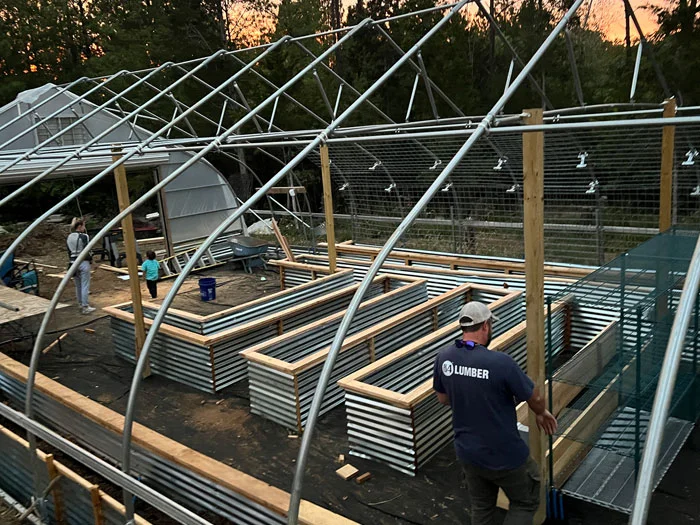
A high tunnel (often called a hoop house) used to grow crops on an active farm is the kind of structure the farm exemption was written for. Many Virginia growers in that situation will not need a building permit. That does not mean no paperwork at all. Counties commonly still require a zoning review, proof that the property is an operating farm, and sometimes a signed affidavit describing how the structure will be used.
A greenhouse at home
A greenhouse in a residential backyard is a different story. If there is no farming operation on the property, the farm exemption generally will not apply, and the structure is treated like other accessory buildings under your county’s building and zoning rules. Size, height, and location all matter, and the thresholds vary by locality.
A permanent glass or polycarbonate greenhouse
Permanent greenhouses, especially those with a poured slab, electrical service, heating, or plumbing, tend to draw more review. On a qualifying farm, the structure itself may still fall under the farm exemption. Separate trade work, wells, septic, and bathrooms can trigger their own permits or health department review. If you plan to add power, water, or climate control, mention it when you call the county.
One practical example: Fauquier County’s official agricultural construction page states that a qualifying farm building does not need a building permit, but a zoning permit is required unless the structure is under 256 square feet, and smaller structures still have to meet zoning setbacks from property lines and floodplains. The same page notes that a land disturbing permit may be needed depending on the extent of the work. Other counties handle this differently, which is exactly why the call matters.
Foundations and pads: gravel, anchors, and concrete slabs
Your foundation choice affects performance first and permitting second, but both deserve attention.
- Compacted gravel pad with a perimeter frame. Smaller and seasonal structures can often sit on a compacted, well-drained gravel base. Gravel handles drainage well and keeps the footprint simple.
- Ground anchors and posts. Many high tunnel kits are designed to anchor directly into the ground. Anchoring against wind is not optional, no matter which base you choose.
- Reinforced concrete slab. Larger and permanent greenhouses usually perform best on a level, reinforced concrete slab, especially when the plan includes shelving, plumbing, irrigation lines, or electrical runs.
Does a concrete pad change permit needs?
A slab does not automatically mean you need a building permit, and a gravel base does not automatically mean you skip one. What usually matters is how the structure is classified, how much land you disturb, and where the work happens. Pouring a slab, grading a site, and trenching for water or power all count as land disturbance, and Virginia localities review land disturbance under erosion and sediment control rules that are separate from the building code. If your project includes a slab or significant grading, ask the county whether a land disturbing permit or agreement applies.
Whatever base you choose, the site underneath needs proper grading and drainage. A greenhouse that sits in a wet spot will fight you for years.
Who to contact in Virginia
Two different offices answer two different questions. Mixing them up is one of the most common mistakes we see.
Your county building and planning offices
Your county building department decides whether a building permit is needed. The planning or zoning office reviews where the structure can go, including setbacks and floodplain limits. Many counties also review land disturbance and stormwater through an environmental or engineering division. Start with your county’s community development or building department and ask them to point you to every office that needs to sign off.
If you are in one of the counties we serve, such as Fauquier, Prince William, Loudoun, Warren, Stafford, Culpeper, or Rappahannock, your own county’s offices are the right place to start. Rules differ from one to the next, so do not assume a neighbor’s experience in another county applies to you.
USDA NRCS, when cost-share is involved
If you are pursuing a high tunnel through the USDA Natural Resources Conservation Service (NRCS) Environmental Quality Incentives Program (EQIP), NRCS decides program eligibility and funding. NRCS does not issue building or zoning permits. That remains between you and your locality, and it is smart to ask both questions in parallel so neither one holds up the other.
NRCS accepts applications year-round and ranks them in funding cycles, so ask your local USDA Service Center about the current ranking cutoff. For the full picture on funding, see our guide to NRCS high tunnel grants in Virginia.
A practical pre-build checklist for Northern Virginia sites
Bring these questions to your county, and have your answers ready before you order a kit.
- Is my property an operating farm? Know what documentation your county accepts as proof of agricultural use.
- How will the structure be used? Crop production, storage, retail sales, or personal use can change how it is classified.
- What size and height is the structure? Have the kit specifications or plans on hand.
- Where exactly will it sit? Measure distances to property lines, wells, septic fields and reserve areas, and driveways.
- Is any part of the site in a floodplain? Floodplain locations can bring flood-proofing requirements even for farm structures.
- How much ground will be disturbed? Include the pad, grading, driveway changes, and any trenching for water or power.
- Will the structure have power, water, heat, or plumbing? These can trigger separate permits or health department review.
- Will the public visit? Virginia law sets specific requirements for farm buildings used for agritourism or on-farm sales.
- Is NRCS involved? If so, confirm program requirements with your NRCS office before construction starts.
- Have I called 811? Contact VA811 before digging so underground utilities can be marked.
Write down who you spoke with, the date, and what they told you. If a permit or zoning approval is required, get it in hand before site work begins.
How Green Team Builders helps after the rules are clear
Once you know what your county requires, the real work begins, and site preparation is a big part of every successful greenhouse or high tunnel project. Green Team Builders designs and installs polycarbonate greenhouses, hoop houses and high tunnels, lean-to greenhouses, and glass greenhouses for growers who want a more permanent, premium structure.
Here is where we come in:
- Site planning. Not sure where the structure should go or how water will move across the site? Our Plan Your Plot service helps you map layout, sun, and drainage before anything is built.
- Grading and trenching. Our skid steer site prep handles grading, drainage work, and trenching for water lines.
- Foundations. We pour level concrete pads for greenhouses and garden structures, planned around drainage, anchoring, and future plumbing or irrigation lines.
- Installation. We handle site evaluation, foundation preparation, material delivery, and full installation. Explore our greenhouse buildings and garden structures to see the options.
We cannot decide what your county will require, but we can help you show up to that conversation with a clear plan, then build the project right once the rules are settled.
Frequently asked questions
Do high tunnels always need a building permit in Virginia?
No. A high tunnel that qualifies as a farm building or structure under Virginia law is exempt from the statewide building code, which generally means no building permit. Your county may still require a zoning permit, floodplain review, or land disturbance approval, and a high tunnel at a home without a farming operation is treated differently. Check with your county before you build.
Does a concrete pad mean I automatically need a permit?
Not automatically. Permit needs depend mostly on how the structure is classified, where it sits, and how much land is disturbed. A slab and the grading around it count as land disturbance, so ask your county whether erosion and sediment control review applies to your project.
Who decides NRCS eligibility vs who issues a building permit?
USDA NRCS decides eligibility and funding for EQIP high tunnel projects. Your county or city handles building, zoning, and land disturbance permits. They are separate processes, and you may need to work through both.
Can Green Team Builders pull permits for my project?
Permit requirements vary by county, and we can help guide the process as part of planning your project. Ask us about your specific site during your consultation so we can talk through what your county is likely to need.
Which Northern Virginia counties does Green Team Builders serve for greenhouse installs?
We serve Fauquier, Prince William, Loudoun, Warren, Stafford, Culpeper, and Rappahannock counties, and our greenhouse division builds within about 100 miles of Catlett, Virginia. Call us to confirm your location.
Ready to plan your greenhouse or high tunnel?
Start with your county, then let us handle the site. Whether you need help choosing a location, preparing a pad, or installing the full structure, Green Team Builders is ready to help you build it right the first time. Call 540-216-2395, contact us online, or start with Plan Your Plot to map out your site.