NRCS High Tunnel Greenhouses in Virginia: Funding Themes, Site Prep, and Local Installation
An NRCS high tunnel grant in Virginia usually means cost-share support through EQIP for a season-extension structure, commonly called a hoop house. Eligibility and ranking are decided by USDA NRCS, not by installers. This guide explains the program themes in plain language, the site work that makes a high tunnel succeed, and how a local Virginia design-build team can prepare the ground and install after you work with your NRCS office.
Virginia growers do not just need a kit SKU. They need a site-ready plan: drainage that works in Mid-Atlantic weather, anchors that hold in wind, access for delivery and equipment, and a clear handoff between federal conservation paperwork and the people who actually build the structure. That is where many projects stall, and that is where a local installer earns its keep.
What is an NRCS high tunnel (and how it differs from a hobby greenhouse)
High tunnel / hoop house basics
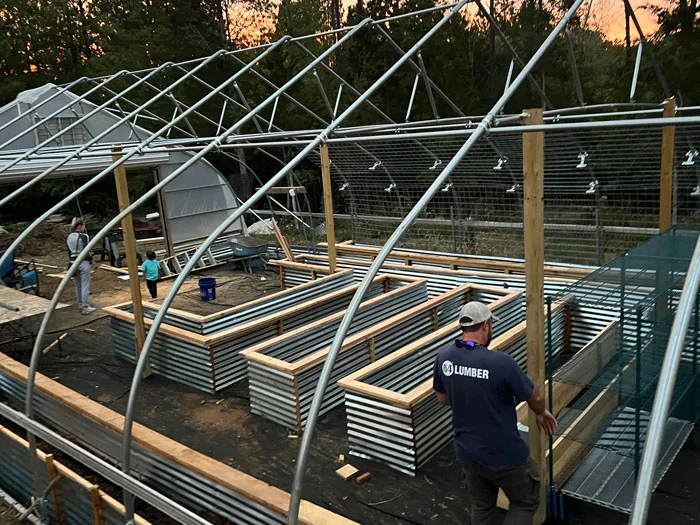
According to USDA NRCS, a High Tunnel System (often called a hoop house) is a conservation practice that helps farmers extend the growing season and manage crops with financial and technical assistance available through the Environmental Quality Incentives Program (EQIP). In everyday language, a high tunnel is a framed structure covered with greenhouse plastic (or similar covering) that sits over production beds. It is usually lighter and more seasonal than a fully glazed, climate-controlled greenhouse. Growers use high tunnels to protect crops from weather extremes, stretch harvest windows, and improve growing conditions without jumping straight into a permanent glass or polycarbonate building.
NRCS does not treat every backyard hobby structure as the same thing as a working High Tunnel System practice. Program rules, practice standards, and eligibility are set by USDA NRCS and applied through your local service center. Green Team Builders does not determine whether a structure qualifies for cost-share. That decision rests with NRCS.
When a more permanent greenhouse may be a better fit
A high tunnel is a strong fit when season extension and production efficiency are the main goals and a lighter structure matches your operation. A more permanent greenhouse may be a better fit when you want multi-year durability, different covering materials, more climate control, or a structure that will sit as a long-term building on the property. Green Team Builders designs and builds greenhouse and garden structures that include hoop houses / high tunnels, polycarbonate greenhouses, lean-to styles, and smaller cold-frame options. If a high tunnel is not the right path for your goals, talk through greenhouse alternatives on the Greenhouses and Garden Structures page before you lock a kit or a foundation plan.
EQIP High Tunnel Initiative: a high-level overview for Virginia producers
What EQIP and the High Tunnel Initiative are trying to do
EQIP is NRCS’s flagship conservation program that helps agricultural producers address natural resource concerns on working lands. The High Tunnel Initiative is the path many producers use when a high tunnel system is part of that conservation plan. In plain terms: you work with NRCS on eligibility, conservation planning, and ranking; if selected and contracted, cost-share can help with implementing an approved High Tunnel System practice. Exact practice requirements, payment schedules, and contract terms come from NRCS, not from a contractor website.
Virginia’s EQIP offerings have included High Tunnel System ranking pools described by NRCS Virginia (for example, area-based high tunnel competition and statewide pools aimed at beginning farmers and socially disadvantaged producers, among other EQIP offerings). Pool names and availability can change by fiscal year. Always confirm the current Virginia offerings with your local NRCS service center or the official Virginia EQIP page on nrcs.usda.gov.
Where to start (local NRCS service center and Farm Service Agency records)
If you are exploring an NRCS high tunnel grant in Virginia, start with official channels:
- Contact your local USDA NRCS service center and ask about EQIP High Tunnel System opportunities for your county.
- Make sure farm records and eligibility paperwork are in order with USDA’s Farm Service Agency (FSA) if you are new to USDA programs. NRCS and FSA often work together on eligibility steps.
- Be ready to discuss your land, production goals, and resource concerns. NRCS conservation planning is part of the process, not a rubber stamp on a shopping cart kit.
- Bookmark official resources such as the NRCS High Tunnel Initiative page and the NRCS Virginia EQIP page, and check ranking / application cutoff information on USDA NRCS pages rather than relying on kit-seller blogs.
Green Team Builders can talk with you about site readiness and installation after (or alongside) that NRCS conversation. We do not replace your NRCS planner, and we do not decide grant eligibility.
Why ranking dates matter (without guessing this year’s deadline)
NRCS accepts many program applications on a continuous basis, but applications are typically considered for funding in ranking or batching periods. Missing a cutoff usually means waiting for a later funding cycle rather than getting an instant yes or no. That timing affects when you should order materials, schedule site prep, and plan planting.
Important for growers reading this in late 2026: Virginia-specific ranking or batching dates change by fiscal year. Public reports sometimes circulate unofficial or incomplete dates. Before you treat any calendar date as final, verify it on official NRCS Virginia pages, the national Ranking Dates resource on nrcs.usda.gov, or directly with your local service center. Ask NRCS for the current cutoff that applies to your EQIP High Tunnel System application.
Legitimate risk of waiting too long is practical, not dramatic: you can miss a funding cycle, delay construction into a worse weather window, or rush site prep after a contract is already in motion. The fix is early contact with NRCS and a realistic construction schedule with your installer.
Kit seller vs local installer: choosing the right path
What kit companies typically provide
National and specialty greenhouse companies often excel at manufacturing and shipping framed systems. Many sell high tunnels and related structures designed with NRCS practice conversations in mind. Some publish helpful education about EQIP. What they often do not provide is local, on-the-ground installation: grading, drainage, pad or anchor prep, trench work for utilities, and assembly by a crew that already works Northern Virginia soils and access constraints.
Buying a kit can be the right materials path. Treating the kit invoice as a finished project is where growers get into trouble. Unprepared sites lead to ponding water, uneven beds, anchors that pull in storms, and delayed planting seasons. Cost-share paperwork does not grade your field for you.
What Green Team Builders handles (site prep, pads, install)
Green Team Builders is a Virginia outdoor construction and landscaping team based in the Catlett / Fauquier area (ZIP 20119). For greenhouse and high tunnel projects, the published service mix includes structure installation support through Greenhouses and Garden Structures, site preparation with Skid Steer Solutions, and Concrete Pads when a slab or pad is part of the plan.
Typical local-installer work includes:
- Site evaluation for access, slope, drainage, and structure footprint
- Clearing, grading, and shaping for a level, workable pad area
- Drainage and erosion-minded earthwork so water moves away from beds and foundations
- Concrete pads or other foundation/anchor preparation when the design calls for them
- Trenching coordination for irrigation, electrical, or automation lines
- Installation support for hoop houses / high tunnels and related greenhouse styles offered by the team
If you already purchased a third-party kit, ask during consultation whether Green Team Builders can install that specific product on your site. Do not assume every brand and every kit configuration is automatically within scope until the team reviews plans, manufacturer requirements, and site conditions.
Site readiness checklist before your structure arrives
Grading, drainage, and access
Virginia weather rewards good drainage. A high tunnel on a low spot will fight mud, disease pressure, and frustrated crews. Before steel and plastic arrive, walk the site for:
- A level or intentionally graded footprint sized to the structure
- Surface water paths that keep runoff out of beds and away from anchors
- Truck and equipment access for delivery, skid steer work, and future maintenance
- Clearance from septic systems, wells, buried utilities, and property lines
- Sun exposure and wind exposure that match your crop plan
Skid steer work is often the difference between a clean start and a season of corrections. Green Team Builders uses compact equipment for lot clearing, grading, excavation for pads, and drainage shaping as part of site prep for greenhouse and outdoor construction projects.
Foundations, anchoring, and concrete pads
High tunnels are often ground-anchored rather than sitting on a full building foundation, but that does not mean foundation thinking is optional. Manufacturer specs and NRCS practice standards (when cost-share is involved) drive how the structure must be anchored. Some growers want gravel floors, landscape fabric, or concrete pads for work areas, headhouses, or adjacent greenhouse styles.
When a pad is part of the plan, a level, properly prepared concrete base supports clean installation and long-term use. Green Team Builders pours concrete pads for greenhouses and garden structures, with site grading and base prep as part of that workflow. Confirm pad thickness, reinforcement, anchoring details, and drainage with both your structure plans and your local code or inspector when a permit applies.
Irrigation, electrical, and automation trenches
Season extension gets more valuable when irrigation and simple automation are planned before the cover goes on. Trenching for water lines, conduit, and drainage is easier (and cleaner) before beds are built and plastic is tensioned. Green Team Builders offers trenching services for irrigation and electrical pathways as part of skid steer and site work. Plan utilities early so you are not cutting through a finished floor later.
If you still need layout clarity before choosing a footprint, Green Team Plan Your Plot service supports on-site measurement, terrain mapping, and layout planning so structure placement, access, and drainage decisions are based on real site data.
Matching structure type to your goals
Exact product specifications, wind ratings, and NRCS-approved bill-of-materials lists belong in manufacturer documents and NRCS practice guidance, not in a blog article.
Common paths Virginia growers compare:
- High tunnel / hoop house: cost-effective season extension for production beds
- Polycarbonate greenhouse: more durable panel systems for growers who want a longer-lived enclosed structure
- Lean-to or smaller enclosed structures: useful when space is tight or the structure attaches to an existing building
- Cold frames and mini greenhouses: starter-scale protection, not a substitute for a production high tunnel
Gothic-style frames and other arch profiles show up across the industry because snow shed and interior volume matter in Mid-Atlantic winters. Choose structure type based on crops, labor, durability goals, and what your NRCS plan requires if cost-share is in play. Then size the site prep to that structure, not the other way around.
Northern Virginia service context
Green Team Builders publicly lists service across Fauquier, Prince William, Loudoun, Warren, Stafford, Culpeper, and Rappahannock Counties in Virginia, including communities around Catlett, Warrenton, Bealeton, Remington, and nearby Northern Virginia towns named on the company site. If your farm or homestead is outside those listed counties, contact the team to confirm whether your address can be served for a greenhouse or high tunnel project. Do not assume statewide coverage from a blog article.
Virginia is the primary focus of this guide. Greenhouse installation conversations for neighboring Mid-Atlantic states should be confirmed case by case with the company; this article does not claim out-of-state service areas that are not clearly listed on current Green Team Builders pages.
Practical risks of skipping the site-readiness step
Real risks to plan for, without exaggeration:
- Poor grading and drainage can undermine beds, create standing water, and shorten the useful life of the structure.
- Weak or incomplete anchoring can leave a tunnel vulnerable in wind events common to open Virginia fields.
- Starting construction before NRCS eligibility and contract steps are clear can create timing and reimbursement headaches between you and USDA.
- Treating a kit delivery as a turnkey project can leave utilities, pads, and access unfinished when planting season arrives.
- County permit and zoning rules vary. A temporary agricultural structure in one county may be reviewed differently in another. Confirm requirements with your locality; this article is not legal advice.
Green Team Builders helps with the construction and site side: preparing the ground, pouring pads when needed, and installing greenhouse and high tunnel styles within the company’s service offering. We do not guarantee NRCS approval, payment, or legal compliance. Those outcomes depend on USDA decisions, your paperwork, manufacturer specs, and local rules.
Next steps and CTA
- Talk with your local NRCS office about EQIP High Tunnel System opportunities and current ranking timelines for Virginia.
- Get your FSA / USDA customer records in order if you are new to federal conservation programs.
- Map the site: footprint, drainage, access, utilities, and structure type.
- Decide whether you need a kit-plus-local-install path or a full local greenhouse / high tunnel build conversation.
- Schedule a site consultation with Green Team Builders for prep and installation planning.
When you are ready for the build side, review Greenhouses and Garden Structures, then contact Green Team Builders. Call 540-216-2395, use the contact form, or start with the website virtual agent for initial questions. If you need measurement and layout first, begin with Plan Your Plot.
FAQ
What is the NRCS High Tunnel Initiative?
It is an NRCS path, delivered through EQIP, that can provide financial and technical assistance for High Tunnel Systems (hoop houses) used as a conservation practice on eligible agricultural operations. Details, standards, and selection are handled by USDA NRCS.
Does Green Team Builders help with NRCS paperwork?
Green Team Builders focuses on site preparation and installation for greenhouse and high tunnel projects. Eligibility, applications, ranking, and contracts are handled through your local NRCS service center and related USDA offices. Ask the team what project documentation they can provide for your construction scope; do not assume grant-writing services unless confirmed for your project.
Do high tunnels always need a building permit in Virginia?
No universal answer applies statewide. Permit and zoning requirements vary by county, locality, and how the structure is classified. Confirm with your county or municipal building and planning offices before you build.
How long does high tunnel installation usually take after the site is ready?
It depends on structure size, weather, access, foundation or anchoring details, and whether utilities are already in place. Ask for a project-specific schedule during consultation rather than relying on a generic blog timeline.
Can Green Team Builders install a kit I already purchased?
Possibly. Bring manufacturer plans, model details, and site photos to a consultation so the team can confirm whether that kit can be installed under local site conditions and company scope.
What is the difference between a high tunnel and a polycarbonate greenhouse?
A high tunnel is typically a lighter, plastic-covered season-extension structure over production beds. A polycarbonate greenhouse generally uses rigid multi-wall panels and is often chosen for a more durable, longer-lived enclosed growing space. The right choice depends on goals, budget, and, when applicable, NRCS practice requirements.
Which Virginia counties does Green Team Builders serve for greenhouse projects?
Publicly listed counties include Fauquier, Prince William, Loudoun, Warren, Stafford, Culpeper, and Rappahannock. Contact the team to confirm coverage for your specific address.
Will Green Team Builders guarantee that my structure is NRCS approved?
No installer can truthfully guarantee NRCS approval. NRCS determines eligibility, practice compliance, and funding. Green Team Builders can help you build a site-ready structure within the company’s construction services while you follow official USDA guidance.